Boil Water Advisories Manitoba . The united nations declared march 22 as world water day since 1993. Public information, contact manitoba government inquiry: First Nation to get new water plant after being under boil water from mb.bestbrothersgroup.com Manitoba health said the public. Water advisories are issued for a drinking water system or a drinking water source by a medical officer of health (manitoba health) due to a confirmed or suspected water quality problem. Several southern manitoba communities are still under a boil water advisory after a hiccup at the letellier water treatment plant on friday night.
Why Do Amides Have The Highest Boiling Point. Amides have a very high molecular weight. The amides generally have high boiling points and melting points.
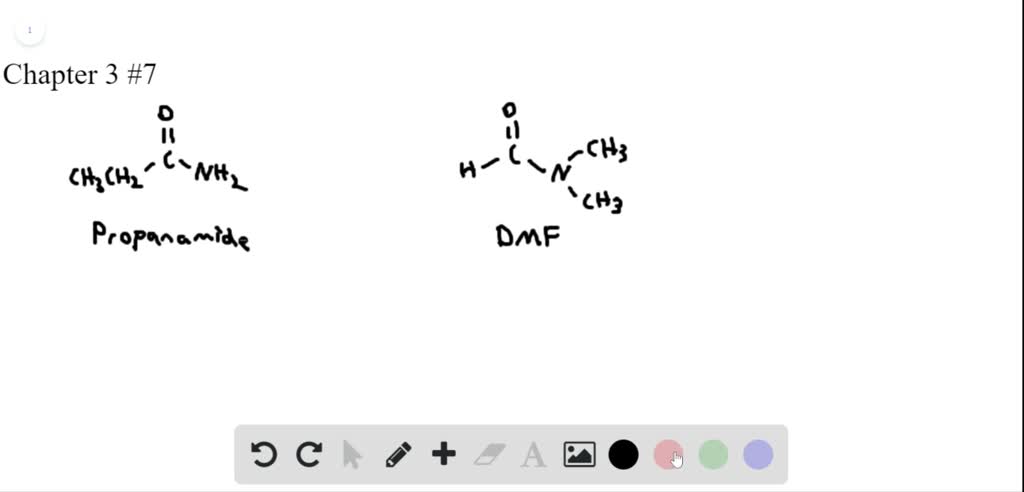
SOLVEDExplain why the boiling point of propanami… from www.numerade.com
Amines generally have lower boiling points than alcohols of comparable molar mass because amines have weaker hydrogen bonds than alcohols. Amide has higher boiling point than carboxylic acid. Carboxylic acid has one hydrohen bond donor atom and two hydrogen bond acceptor atom while amide has two donor and two acceptor atoms.
A Similar Trend May Be Seen With The Melting Points Of The Amides That Did Not Have Boiling Points Available.
Amides have very high electron density. Primary amines have higher melting points than secondary amines, because they can form more hydrogen bonds with themselves. Because ammonia (nh₃) and hydrogen fluoride (hf) both have high boiling points, they must have strong intermolecular forces.
Compound = M, K, & I.
Why do amides have very high boiling points? See the answer see the answer see the answer done loading. What is the boiling point of amine?
Consider The Compounds Methanol And Methylamine.
Alkynes have lower boiling points than alkenes because they have lower molar mass, thus weaker dispersion forces. The boiling points of amides are much higher than those of alcohols of similar molar mass. Tertiary amines have no hydrogen atoms bonded to the nitrogen atom and therefore are not hydrogen bond donors.
Because Amide Will Form More Hydrogen Bonds Than Carboxylic Acid.
Amines have lower boiling points than alcohols because nitrogen is less electronegative than oxygen. Why do amides have higher boiling points than amines. Of all acid derivatives, amides have the highest boiling points.
Carboxylic Acid Contains One Hydrogen Bond Donor Atom And Two Hydrogen Bond Acceptor Atoms, Whereas Amide.
While alkenes have lower boiling points than alkanes due to smaller. Amide has higher boiling point than carboxylic acid. Molar mass = 32 g/mol;


Comments
Post a Comment